Nsayka Wawa
A town that only speaks Chinuk Wawa, and the forest beyond it that keeps a secret.
Walk in, and the language is already happening
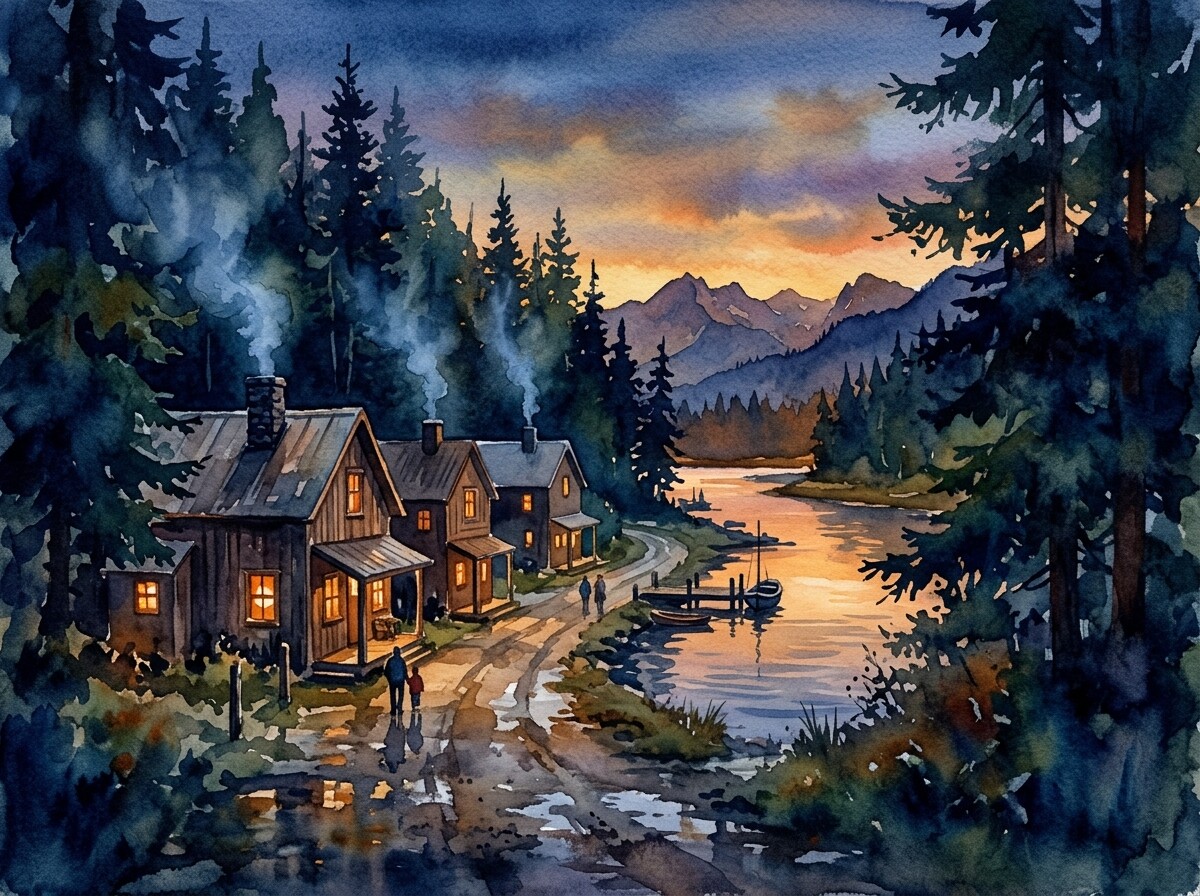
The general store, the bakery, the cultural center, the diner. Each one keeps its own hours and its own talk. The shopkeeper says something about bread; you catch a word; you go find out what the rest of it meant, and come back able to follow him.
- Residents speak Chinuk Wawa and move on their own daily schedules
- Overhear a phrase, find where to learn it, return to understand it
- A roguelike forest that reshuffles each time you leave town
- Track animals, gather seasonal materials, craft, and trade
- A mystery waiting in the trees
You wake up in a hospital bed in a town you do not recognize, and the first thing you notice is that you cannot read the sign on the wall. Someone found you out in the cedar grove, unconscious, with nothing in your pockets. A woman named Vera explains this to you in English, which is a mercy, because she is the only person in the whole town who will speak it to you.
Everyone else speaks Chinuk Wawa.
See the roadmap for where the build is right now, and what is coming next.
The language is the air, not the subject
Chinuk Wawa grew up along the Columbia River as a trade language, a way for people who did not share a tongue to do business, marry, argue, and tell stories. Today there are only a few hundred fluent speakers left. Nsayka Wawa, which means “our language,” is built to add to that number.
So there is no vocabulary list waiting for you. There is a town. You walk into the bakery and the baker says something about bread, and you catch maybe one word of it. That gap, the wanting to know, is the whole engine of the thing. You go find where that word is taught. You come back. And this time the sentence opens up for you. That is the loop the entire game runs on: overhear it, go learn it, return and understand.
It is the way most of us learned our first language, before anyone handed us a worksheet. You will not feel like you are inside a method. You will feel like you are trying to keep up with your neighbors.
A town full of people with somewhere to be
The residents are not statues bolted to a room, waiting for you to talk to them. They have schedules. The shopkeeper is at the general store in the morning and at the diner in the evening, and the words you hear from him depend on which one you catch him in. An elder talks about weather in the park and about cedar bark at the cultural center. Visit the same place at a different hour and you meet a different person speaking about a different thing.
The school teaches by curriculum, one lesson a week. The cultural center teaches a craft. But the real teacher is the town itself, and it does not slow down for you.
Past the last house, the forest
Walk east, out where the town ends, and the cedar grove begins. Keep going and it deepens into something older. Every time you leave the forest for town, the whole thing reshuffles. The paths you memorized are gone. You cannot coast on a route. You have to pay attention, the same way you have to pay attention to a sentence you have not heard before.
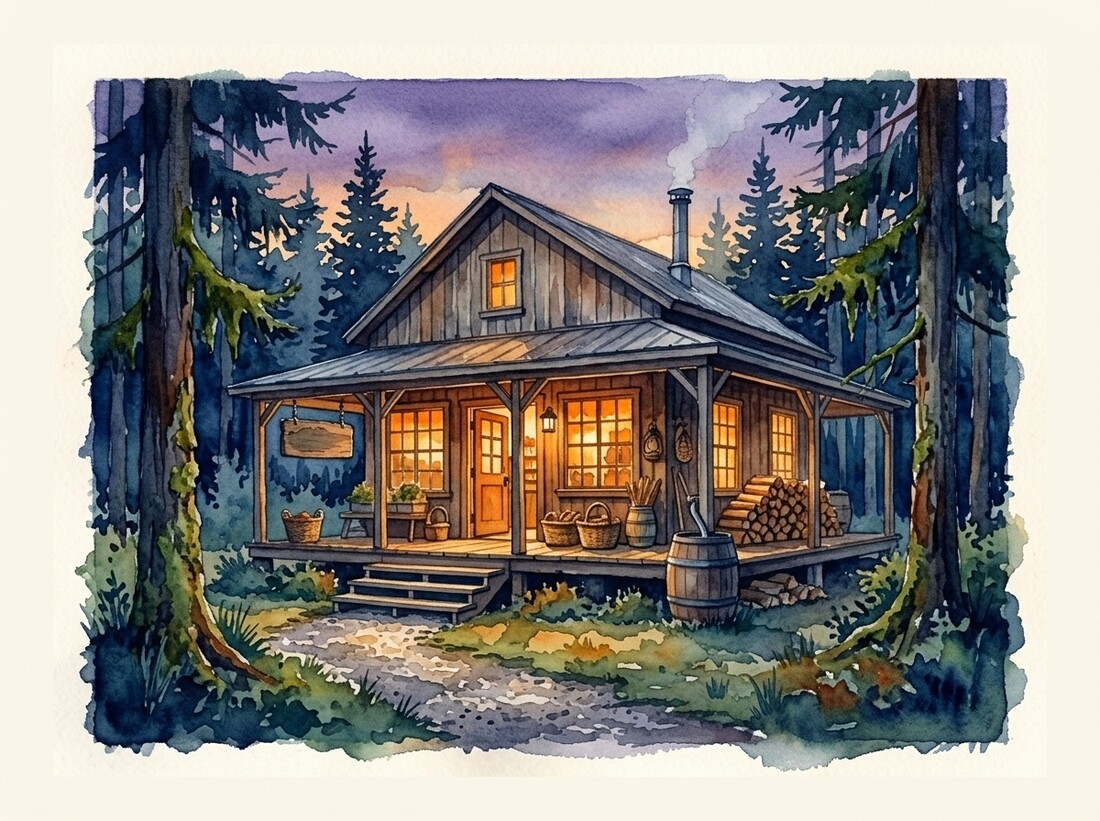
Out there you track animals, you read the season and the weather to know what is worth gathering, you take what the forest gives, you craft, and you carry it back to sell in the store. There is an abandoned cabin you can make your own and store what you find. Survival has a price. Push too hard and you wake up back in that hospital bed, your pockets empty again. But you keep the language. That, you never lose.
Something is out there
You did not arrive in this town by accident, and you did not arrive empty-handed in your head. You came carrying an idea about what lives in these woods.
Move into the cabin and you will start finding gifts inside it. Small things, left while you were gone. Ask the elders and they will tell you, with straight faces, not to worry about it. The forest is big enough to lose a person in, big enough for whatever you think you are chasing. The further you go, and the better you listen, the closer you get to understanding what is actually there, and why the town keeps its quiet about it.
That part you will have to find for yourself. In Chinuk Wawa.
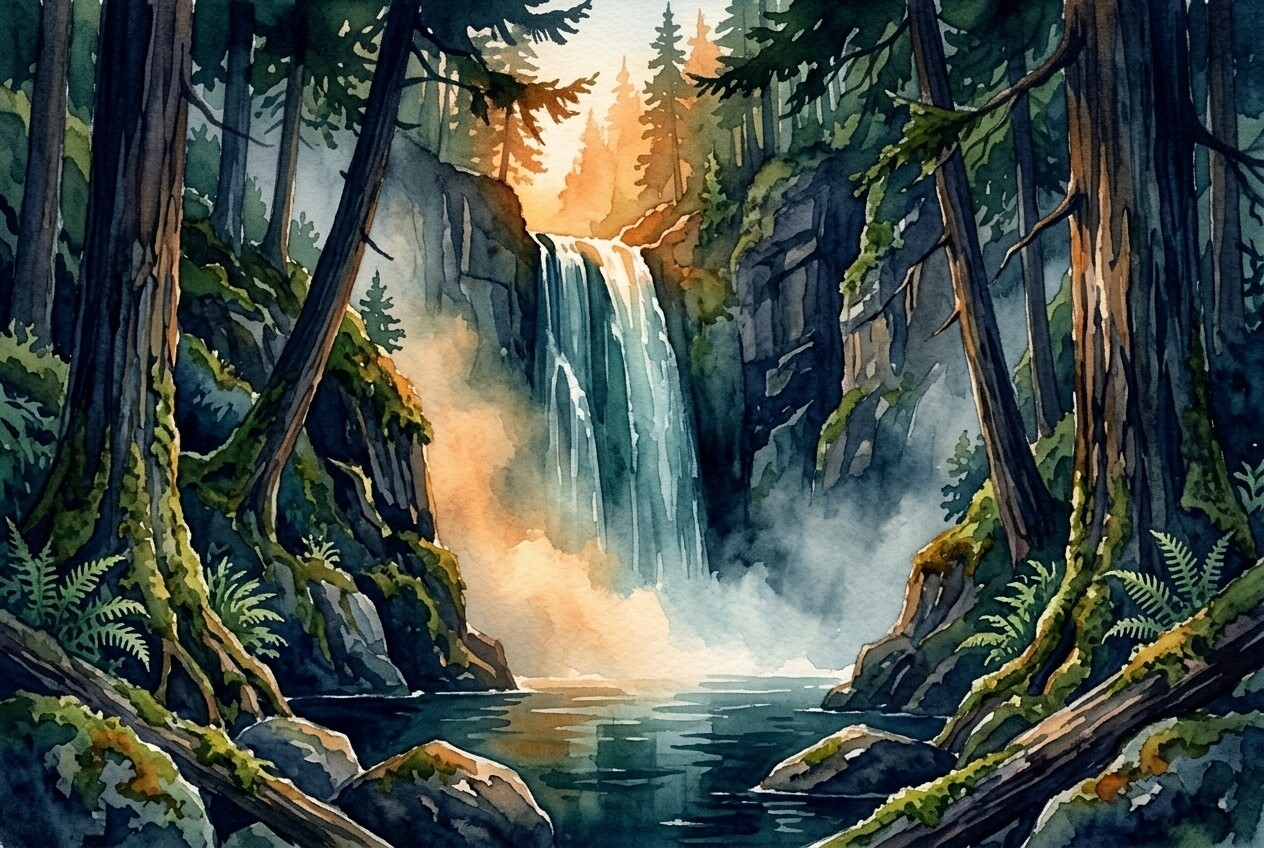
The forest is bigger than the town, and it keeps a secret
Walk east and the cedar grove deepens into something older. It reshuffles every time you leave. The further in you go, and the better you listen, the closer you get to what is actually out there.