Odyssey Skul
Learning modules
Each module is a text-based game built from real history, real culture, and a real language. You learn by playing, not by studying.
Modules
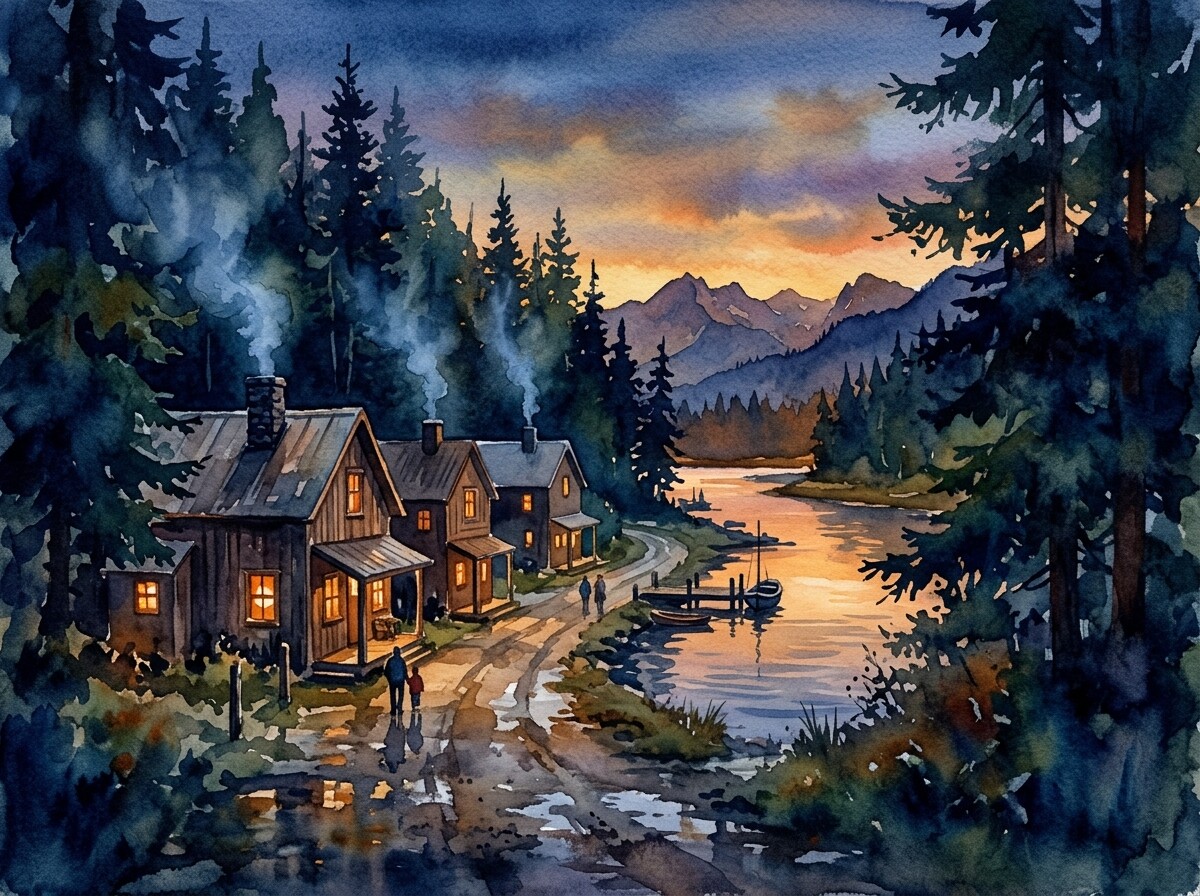
Nsayka Wawa
A town that only speaks Chinuk Wawa, and the forest beyond it that keeps a secret.
Learn more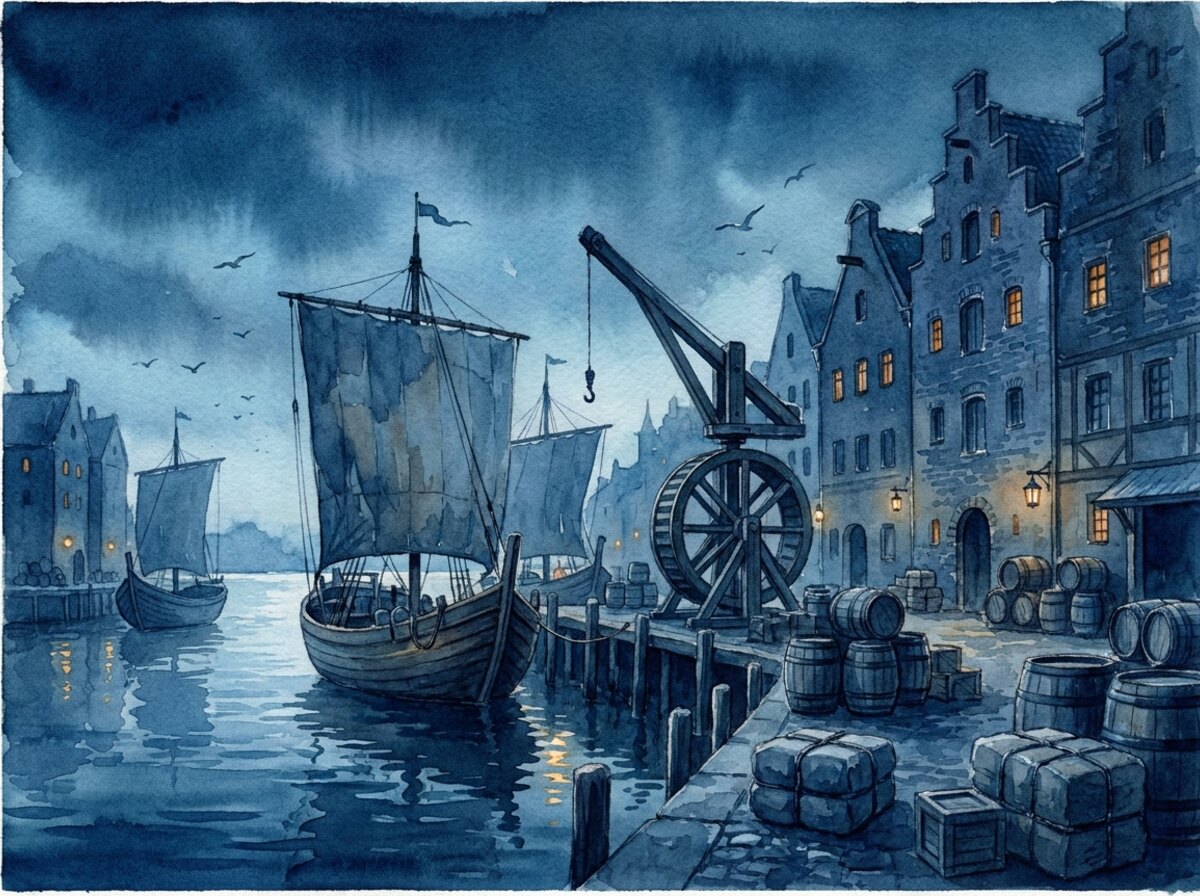
The Hanseatic League
Build a merchant house in the age of the Hansa, where salt and herring move the Baltic and a single storm can undo a season's profit.
Coming soonInside a module
See how a module works
A module is not a lesson with a story wrapped around it. It is a place, and you are dropped into it without much of a briefing. You move through it by typing what you want to do: go inside, look at the boat, ask the woman by the dock about the tide. The world answers in words, and from those words you build the place in your head. That building is not a side effect. It is the point.
Almost everything you come to know, you learn through the same small loop, run again and again.
- 01
Notice
Something lands that you don't quite get: a word, a gesture, a tool used in a way you have never seen.
- 02
Go find out
You follow it. Ask someone, watch, walk to the place where that thing is explained.
- 03
Come back
You return to where you were standing, and this time it opens up to you.
- 04
Carry it
It is yours now, and the next thing you meet leans on it.
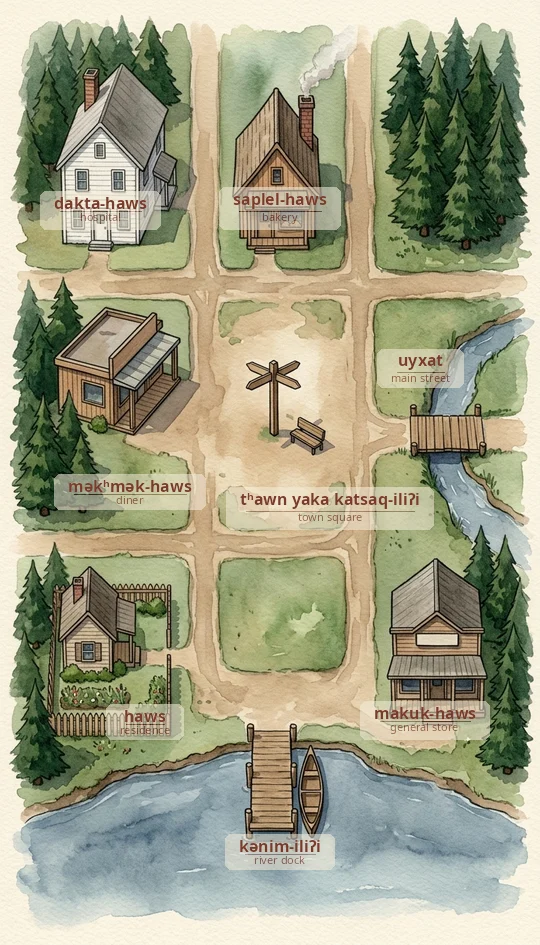
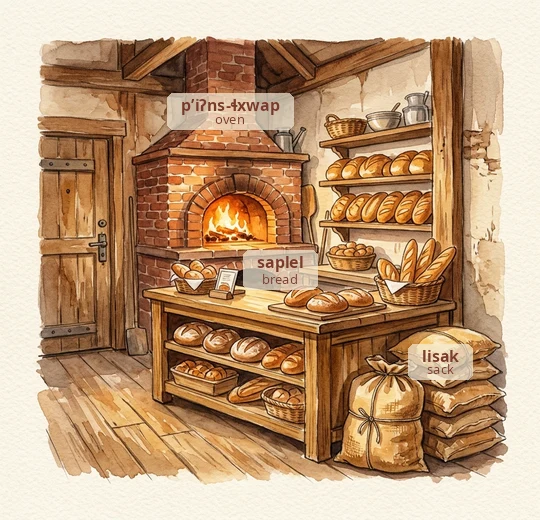
In Nsayka Wawa, the first module, that loop sounds like this: the baker says something about bread, and you catch exactly one word, saplel. You go find where saplel is taught. You come back, and the whole sentence has opened up.
Not only language
The subject changes. The shape doesn’t.
Nsayka Wawa happens to be built around a language: Chinuk Wawa, spoken along the Columbia River for the better part of two centuries, and down to a few hundred fluent speakers now. But a module doesn’t have to be about words at all. Another might set you on a tidewater beach to work out how people there read the weather, got through a winter, or settled a quarrel without anyone raising a voice.
What stays the same is the shape. You are submerged in a setting. You pay attention because you have to. And you leave knowing things you wouldn’t have known to ask about on the way in.
What you walk away with
The kind of knowing that comes from having been somewhere
There is a score. Every module keeps a running count of what you actually understand and calls it your knowledge. The first one, set in a town that speaks Chinuk Wawa, names it in that language: kəmtəks. But the score is not the thing. The thing is that you built a place in your head and stocked it. With words, in this module. With the logic of a tide or the reason a knot mattered, in the next one. Not a subject you were tested on. A place you have been. You can close the tab, and it stays.